Email segmentation: send less, sell more

Most small stores send every email to everyone on the list. Same subject, same offer, same Tuesday. It feels efficient, and it quietly costs money. The people who never open start marking you as spam, the regulars get bored, and the one customer who was ready to buy gets a message about something else.
Email segmentation fixes that. You split your list into groups that mean something, then talk to each group like you know them. Because you do. Your shop already collected the data.
Below: the segments that pay for themselves first, how to build them with what you already have, and the point where splitting your list stops helping.
What a segment is, in one paragraph
A segment is a live filter on your list. Everyone who bought in the last 90 days. Everyone who opened nothing since March. Everyone who spent more than 200 euros. The filter updates itself as people act, so you set it up once and it stays current. This is not the same as tags you assign by hand and forget about a week later.
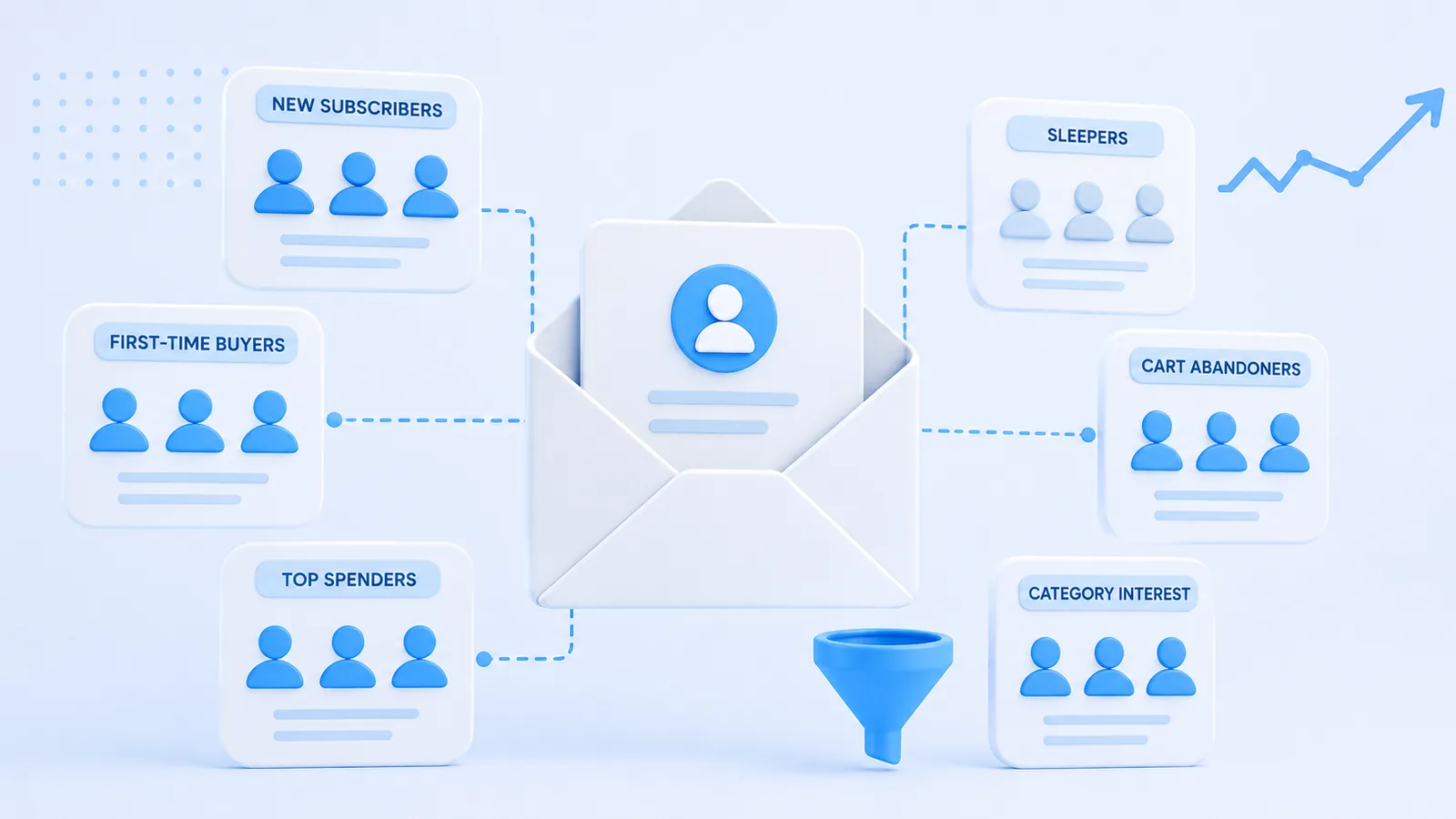
1. New subscribers who have not bought yet
The freshest names on your list, and the most likely to go cold if you ignore them. This group gets your welcome flow: who you are, what you sell, why people come back, and a nudge toward a first order. Interest peaks in the first days after signup. Use them.
2. First-time buyers
One order is a test. The second order is a habit forming. Treat this group as its own audience: a thank you, tips for the product they bought, and a follow-up suggestion that fits it. The goal of every email here is that second purchase, because a two-time customer behaves very differently from a one-time one.
3. Your top spenders
The small group that pays a large share of your revenue. Do not send them discounts. They buy anyway, so a discount is margin given away for nothing. Give them early access, first pick of new stock, a personal note when something they will like arrives. Make it feel like membership, not marketing.
4. Sleepers
No opens, no clicks, 90 days or more. Send one honest win-back attempt, maybe two. After that, stop emailing them. This feels wrong to most shop owners, and it is one of the best things you can do for your results. Mailbox providers watch how many of your recipients engage. A list full of dead weight drags your deliverability down for everyone else.
5. Cart and browse abandoners
People who picked a product and stopped. This is the highest-intent segment you have, and it deserves its own automated sequence rather than a spot in your newsletter. We wrote a separate guide to abandoned cart emails with the exact timing and structure we use.
6. Category interest
Someone who bought an espresso machine does not need another espresso machine. They need beans, a grinder, descaler. Segment by what people bought or browsed, and your product emails start reading like good advice instead of a catalogue. This is the segment where clicks turn into orders fastest.
Build it with data you already have
You do not need new tools for any of this. Purchase history, signup source, opens and clicks, and country or language cover the six segments above. If your store runs on Shopify with Klaviyo or Mailchimp connected, the data is already flowing.
Want richer data? Ask for it. Swimwear brand Andie segments its list with a short fit-finder quiz at signup. A two-question version works for almost any shop: what are you shopping for, and who is it for. People answer, and every email after that gets sharper.
Segmentation is one piece of the machine. Flows, campaigns and deliverability are the rest. Our email marketing service builds the whole thing, so your list quietly earns alongside your ads.
Send most of your email to people who want it
A practical pattern once your segments exist: send most campaigns to your engaged core, test a wider group now and then, and hit the full list rarely. Your open rates climb, complaints drop, and inbox providers learn that people want your mail. Segmentation is not just a revenue play. It is how you protect the channel itself.
Where segmentation goes too far
There is a version of this that collapses under its own weight: fifteen segments, each needing its own copy, until email becomes a part-time job and the campaigns stop going out. If your list is under a thousand people, two or three segments are plenty. Add a new one only when it is big enough to matter and you have something different to say to it.
Where to start this week
Three steps. Build the sleeper segment and stop emailing it. Build the engaged segment and send your next campaign there instead of to everyone. Then set up the buyer segments and write one email for each. That is an afternoon of work, and it changes what your list earns from the next send onward.
Frequently asked questions
What is email segmentation?
Email segmentation means splitting your list into groups based on what people have done or who they are, then sending each group a message that fits. Buyers get different emails than browsers, regulars get different emails than sleepers. Every serious email tool supports it out of the box.
How many segments do I need?
Fewer than you think. For most small stores, five or six earn the money: new subscribers, first-time buyers, repeat customers, top spenders, sleepers, and cart abandoners. Add more only when a segment is big enough to matter and you have something different to say to it.
Does segmentation work with a small list?
Yes, but keep it simple. With a list under a thousand people, two or three segments beat eight. A segment of forty people cannot teach you much, and writing many versions of every campaign is how email stops happening altogether.
Which tool do I need for email segmentation?
Any of the mainstream platforms handles this: Klaviyo, Mailchimp, Omnisend or MailerLite. If your store runs on Shopify, the built-in integrations track purchases and browsing for you, which is where the useful segments come from.
Want your list to earn its keep?
We set up the segments, the flows and the campaigns, then run them. Email is the highest-ROI channel in marketing when someone actually works it.
See our email marketing service