Abandoned cart emails: the 3-email sequence that wins orders back

Someone found your store, picked a product and put it in the cart. Then dinner happened. Or the shipping cost appeared, or the bus arrived, or they wanted one night to think. Roughly seven out of ten carts end this way, across almost every store and industry.
Most shops just let those orders go. The fix is one automated sequence that you build once and that runs forever. Cart recovery emails go to people who chose a product an hour ago, which is why they convert better than any campaign you will ever send.
Why people abandon carts
The reasons are boringly consistent. Surprise costs at checkout, usually shipping, sit at the top of every study. Then: being forced to create an account, a long or glitchy checkout, comparing prices across shops, and plain browsing with no intent to buy today.
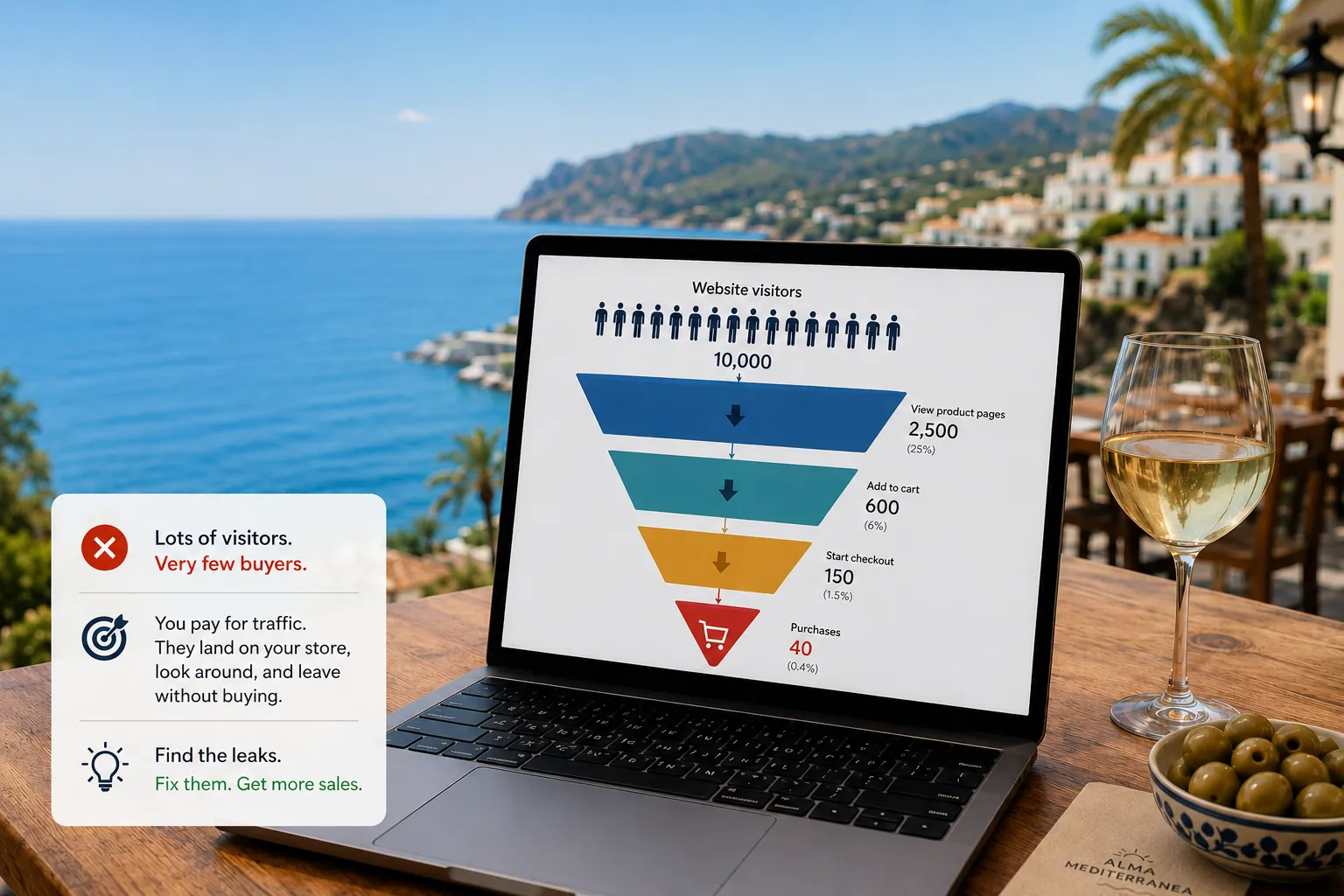
Notice that the first three are checkout problems, not email problems. Email wins back a share of lost carts, but fixing the checkout stops them from being lost at all. Our guide on why webshops get traffic but no sales covers that side.
The 3-email sequence
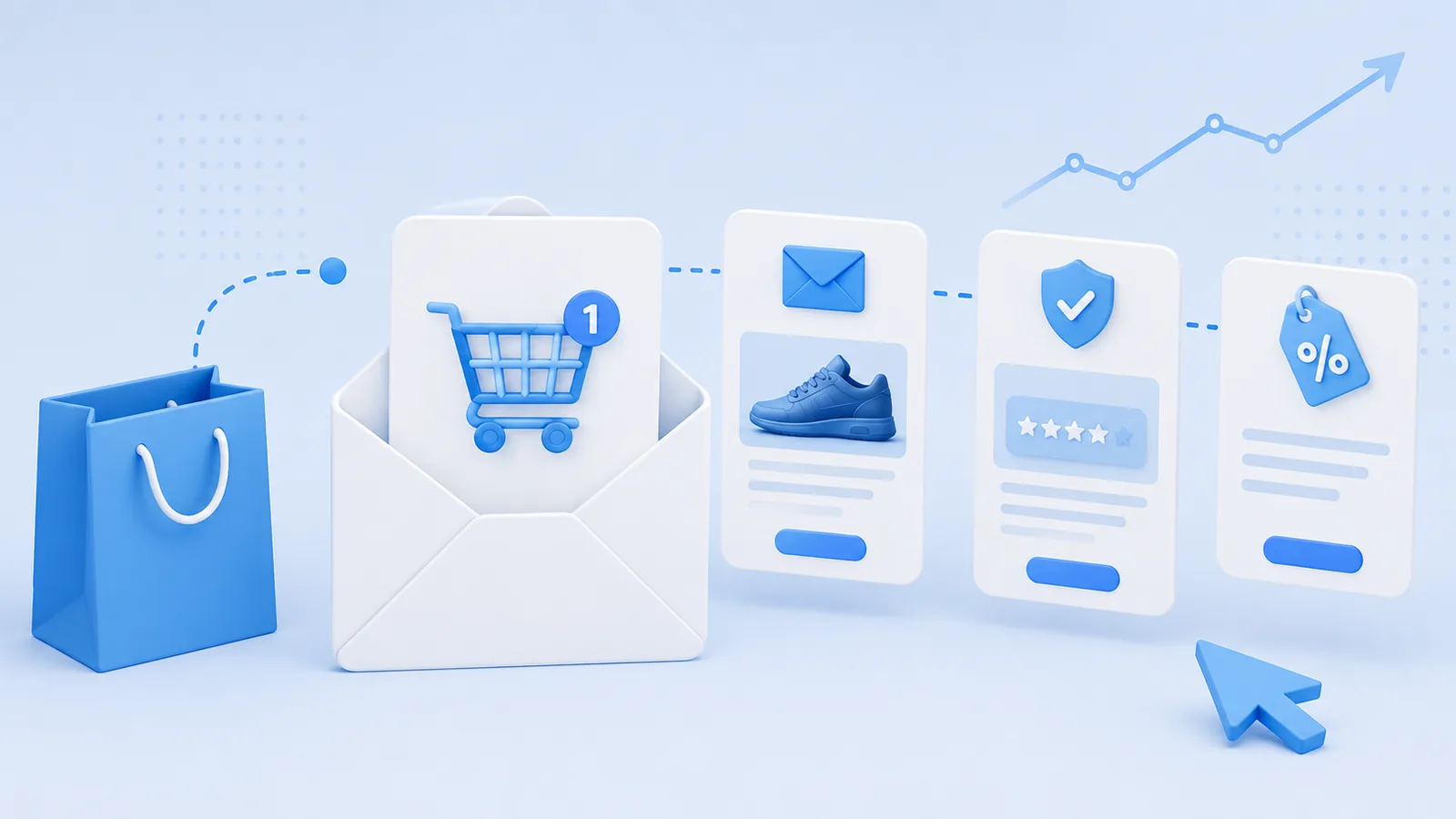
This is the structure we set up for clients. Three emails, each with its own job.
Email 1, about an hour later: the reminder
Plain and friendly. A photo of the exact product, one button back to a filled cart, no discount. Most recovered orders come from this email alone, because plenty of people simply got interrupted. Subject lines that work are the obvious ones: "You left something behind" or "Still thinking it over?"
Email 2, the next day: remove the doubt
Whoever ignored the reminder has a hesitation. This email answers it. Show a review or two for the product, spell out shipping cost, delivery time and how returns work. If stock is low, say so. Invented urgency reads as exactly what it is, and you only get to burn that trust once.
Email 3, day two or three: the nudge
Last message, and the only place an incentive belongs, if you use one at all. Tie it to cart value: small carts get a final reminder and nothing else, mid-size carts get free shipping, and only the largest carts earn a discount code. A closing line that this is the last reminder does real work here.
Why three? One reminder leaves money on the table. Omnisend's data puts sequences of two or three emails at roughly 69% more recovered orders than a single message. Beyond three, you are training people to ignore you.
Why one hour, not five minutes
Emailing minutes after someone leaves feels like being followed around the shop. It also interrupts the people who were coming back on their own, and their orders get wrongly credited to the email. Give it 45 minutes to an hour. Late enough to be polite, early enough that the product is still on their mind.
Writing rules that lift the numbers
Show the exact product, photo included, not a generic "you left items" line. Use the first name if you have it. One call to action, straight back to a cart that is still filled. Keep the subject line plain: mystery subjects get opens and no clicks. And check the email on a phone before it goes live, because that is where most of them get read.
The discount trap
Attach a code to every reminder and your regulars will learn the game: fill the cart, close the tab, wait for the coupon. You end up paying a margin tax on orders that would have happened anyway. Discounts belong in the last email only, above a value threshold, and free shipping usually converts nearly as well as a percentage while costing you less.
An abandoned cart flow is one of five or six automations every store should run. Our email marketing service builds and manages all of them: welcome, cart, post-purchase, win-back and more.
Set it up once
Every mainstream platform has a pre-built flow for this: Klaviyo and Omnisend do it best for e-commerce, Mailchimp does it fine. Connect your store, set the delays, replace the template copy with the words above.
One catch: the flow only fires for people whose email you have. Capture it early. A signup form with a small welcome offer, and a checkout that asks for email in the first step, together make sure far more abandoners are reachable. From there, you can split the flow by cart value or customer type, which is segmentation doing its quiet work. And since these emails only help if they land in the inbox, make sure your deliverability basics are in order too.
Frequently asked questions
How many abandoned cart emails should I send?
Two or three. One reminder alone leaves money behind, and Omnisend's data puts multi-email sequences at roughly 69% more recovered orders than a single message. Past three emails you mostly earn unsubscribes.
When should the first abandoned cart email go out?
Around one hour after the cart is abandoned. Sooner feels like surveillance and interrupts people who were going to finish anyway. Much later and the moment is gone. The second email follows the next day, the third around day two or three.
Should I offer a discount in abandoned cart emails?
Not in the first email, and ideally only for carts worth enough to justify it. If every reminder carries a code, customers learn to abandon on purpose and wait. Save the incentive for the last email, and try free shipping before a percentage off.
Do abandoned cart emails actually work?
Yes, they are typically the highest-converting automation a store runs. The people receiving them chose a product minutes or hours ago. You are not creating demand, just removing whatever interrupted the purchase.
How much is your abandoned cart flow leaving behind?
We build the sequence, write the emails and tune the timing. One setup, recovered orders every month after.
See our email marketing service