Your webshop gets traffic but no sales: 9 reasons why

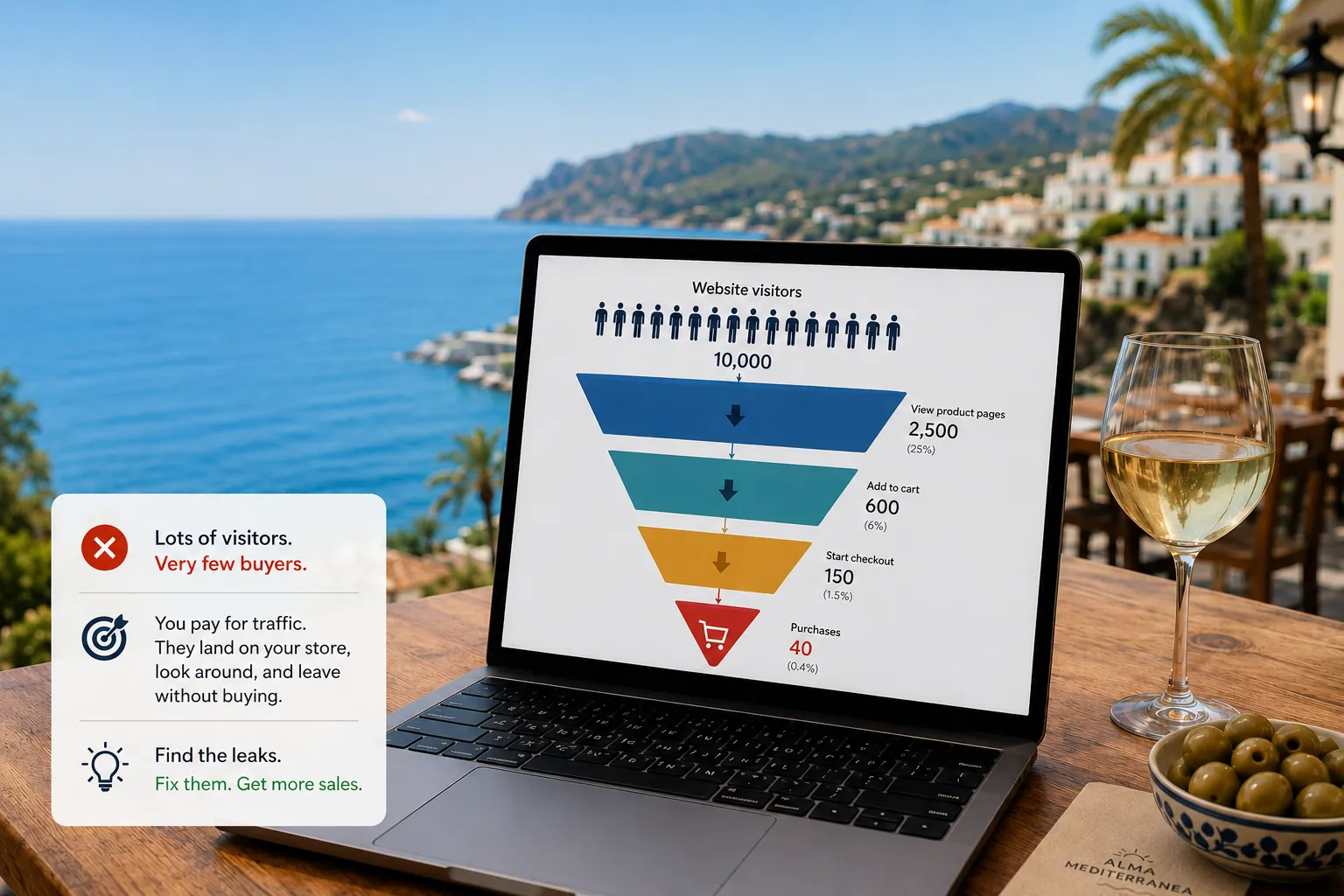
You are paying for visitors. They land on your store, look around, and leave without buying. The traffic looks healthy in your dashboard, the orders do not follow. It is one of the most common problems we get asked about, and one of the most frustrating to live with.
Here is the good news. Traffic without sales is almost always a fixable problem, not a hopeless one. Those visitors were interested enough to click. Something on the site is stopping them from buying. Find that something, fix it, and the same traffic starts paying back.
Below are the nine reasons we run into most often when a store gets visits but no orders, and what to do about each. Most stores are losing money to two or three of these at once.
First, is it the traffic or the site?
Before you change anything, work out where the problem sits. If visitors leave within a few seconds and almost none reach a product page, you may be buying the wrong traffic. If people browse, add to cart, then disappear at checkout, the traffic is fine and the problem is on your site.
Your analytics answers this in minutes. Look at where people drop off: the landing page, the product page, the cart, or the checkout. The biggest drop is where your money leaks. Start there.
1. Your site is too slow
Every extra second of load time costs you buyers, and on mobile people will not wait. If your store takes more than about three seconds to appear, you lose sales before anyone sees a product. Test it on a normal phone on mobile data, not your office wifi. Compress your images, cut heavy apps and tracking scripts, and if the platform itself is the bottleneck, that is a web design problem worth fixing properly.
2. Visitors can't tell what you sell in five seconds
When someone lands, they decide almost instantly whether they are in the right place. If your homepage or landing page does not make clear what you sell, who it is for, and why it is worth it, they leave. Lead with a plain headline and one strong image. Clever can work, but clear always beats clever.
3. Your product pages don't answer buying questions
This is where most sales are won or lost. A product page with two small photos and a one-line description leaves the buyer guessing, and a guessing buyer does not pay. Add more photos from more angles. Give real sizing, materials and dimensions. Show shipping cost, delivery time and the return policy. Add reviews. Answer the questions a customer would ask in a shop, before they have to leave your site to find the answer.
4. There are no trust signals
People do not buy from a site they are unsure about, especially a brand they have never heard of. Reviews, a visible returns policy, recognised payment logos, a real contact method and a proper about page all do quiet work here. A boutique like Sal y Sol earns trust partly because the shop behind the webshop is real and easy to find. Make yours easy to believe.
5. Your checkout asks too much
The checkout is the most expensive place to lose someone. Every extra field, every forced account, every surprise cost pushes people out the door. Offer guest checkout. Show shipping costs early, not as a nasty surprise on the final step. Keep the payment methods people here actually use. The fewer steps between cart and confirmation, the more orders you keep.
Not sure which of these is costing you most? That is exactly what a conversion review finds: where visitors drop off, and the reason behind it, so you fix the leak that matters instead of guessing.
6. The mobile experience is broken
Most of your traffic is on a phone. If your site was built for desktop and merely tolerated on mobile, you are losing the majority of your visitors. Buttons too small to tap, text too small to read, a menu that hides the cart. Walk through every step on a phone yourself, from landing to paid. If buying on mobile is annoying, your conversion rate already reflects it.
7. You're buying the wrong traffic
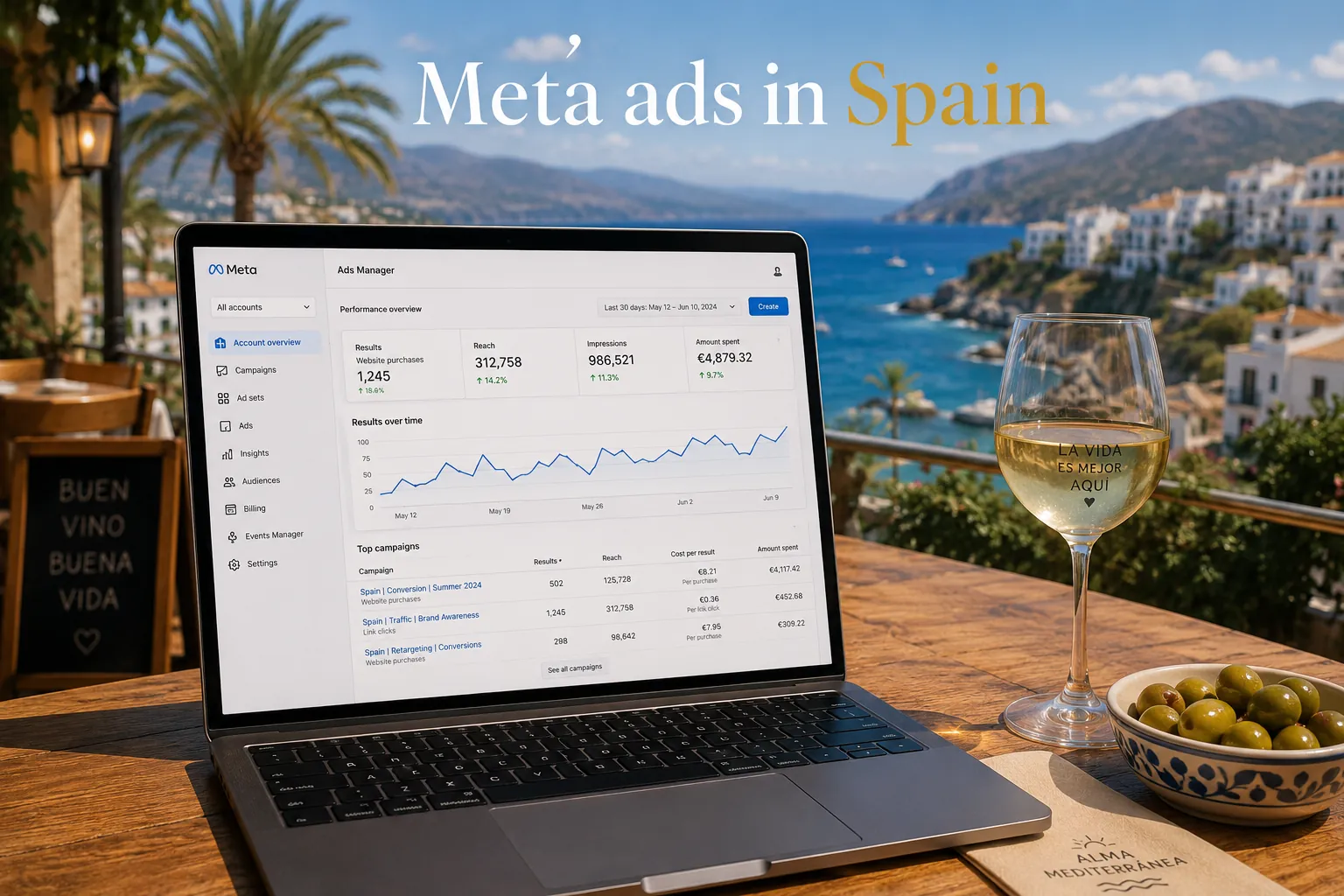
Sometimes the site is fine and the traffic is the problem. If your ad promises one thing and the page delivers another, or you target a broad audience that was never going to buy, you pay for clicks that bounce. Match the ad to the page, and target people with real intent. Our guide to Meta Ads in Spain covers how to reach buyers rather than browsers.
8. Your calls to action are weak or hidden
If a visitor has to hunt for the buy button, you have made buying harder than browsing. Use clear, action-led buttons: Add to cart, Buy now, Book a call. Make them stand out, repeat them down a long page, and never leave a visitor wondering what to do next.
9. You let warm visitors leave forever
Most people do not buy on the first visit, and that is normal. The mistake is doing nothing about it. With a retargeting setup and an email capture, you bring interested visitors back instead of paying to find them all over again. The cheapest sale you will ever make is to someone who already knows you.
Where to start
You do not have to fix all nine at once, and you should not try. Find your biggest drop-off in analytics, fix the reason behind it, measure the result, then move to the next one. That is the whole of conversion rate optimisation: small, measured changes that turn the traffic you already pay for into actual orders.
Frequently asked questions
Why does my webshop get traffic but no sales?
Usually something on the site stops interested visitors from buying: a slow load, an unclear offer, weak product pages, missing trust signals, or a long checkout. Less often, the traffic itself is poorly targeted. Your analytics shows where people drop off, which points to the cause.
What is a good conversion rate for an online store?
Most ecommerce stores convert somewhere between 1% and 3% of visitors into buyers. Below 1% usually points to a clear problem to fix. Above 3% is strong. Rates vary a lot by product, price and traffic source, so watch your own trend more than a single benchmark.
How do I increase my webshop conversion rate?
Start with your biggest drop-off. Speed up the site, make the offer clear, strengthen product pages and trust signals, and shorten the checkout. Change one thing at a time and measure, so you know what actually worked.
Is it my traffic or my website?
If visitors leave within seconds and rarely reach a product page, look at your traffic and targeting. If they browse and add to cart but drop at checkout, the traffic is fine and the problem is on your site.
Find the leak in your funnel
We run conversion reviews that show exactly where visitors drop off and why, then fix it. More revenue from the traffic you already pay for.
See our CRO service