Email deliverability: how to stay out of the spam folder

You can write the best campaign of your life. If it lands in spam, it did not happen. Deliverability is the unglamorous plumbing that decides whether the emails you send are emails anyone sees, and it stopped being optional a while ago.
In 2024 Gmail and Yahoo tightened their rules for bulk senders, and Microsoft followed for Outlook in 2025. Infrastructure that worked fine two years ago now gets rejected outright. The good news: the requirements are public, concrete, and very fixable for a small business.
What deliverability actually is
Three doors exist for every email you send: the inbox, the spam folder, and a rejection you never see. Which door opens depends mostly on your sender reputation, a score inbox providers keep on your domain based on how your mail gets received. Think of it as a credit score for email. It builds slowly, drops fast, and follows you around.
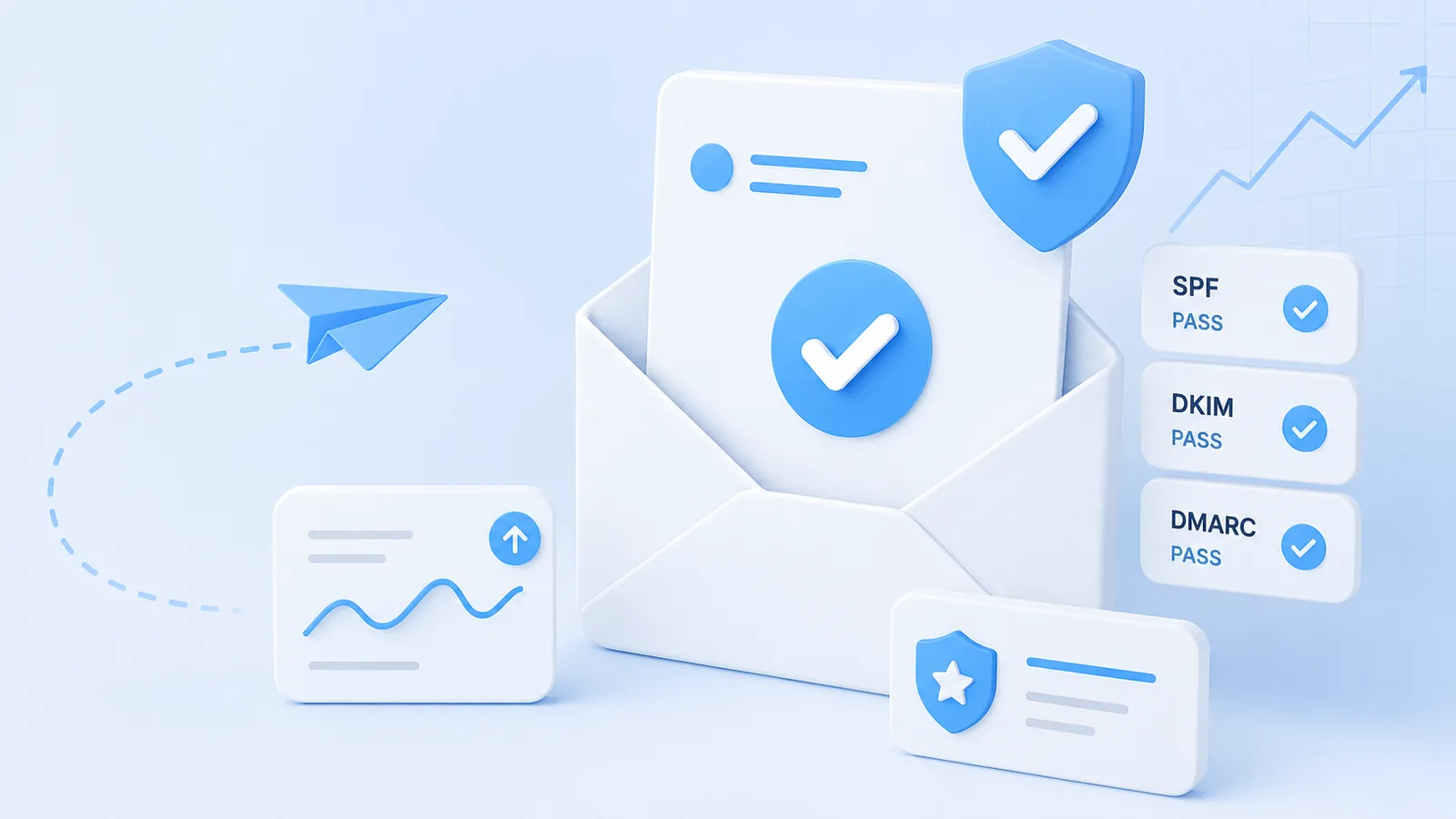
The technical trio: SPF, DKIM and DMARC
These three DNS records are the entry ticket. Without them, the big providers now treat bulk mail as suspect regardless of content.
In plain language: SPF is the list of servers allowed to send email for your domain. DKIM is a cryptographic signature that proves the message was not altered on the way. DMARC is the policy that tells a receiving inbox what to do when one of those checks fails, and where to send the reports.
Your email platform gives you the exact records to paste into your DNS settings, and setup takes about an hour including the coffee. If you send from a Shopify store or a tool like Klaviyo or Mailchimp, the dashboard will literally show you which records are missing. Do this before anything else in this article.
The numbers inboxes judge you on
Two thresholds matter more than all others. Spam complaints: Google wants you under 0.1%, and at 0.3% you get blocked. That is three complaints per thousand emails, which a single careless blast can produce. And bounces: keep them under 2% by removing addresses that hard bounce immediately.
Behind both sits engagement. Providers watch what recipients do with your mail. Opens, replies and moves-to-inbox help you. Deletions without reading, and above all the spam button, hurt.
List quality beats everything
Almost every deliverability disaster we see traces back to the list, not the emails. The rules are short. Only email people who actually signed up, with double opt-in if signups come from a giveaway or a popup. Never buy a list; those addresses are stuffed with traps that flag you as a spammer. Remove hard bounces the day they happen.
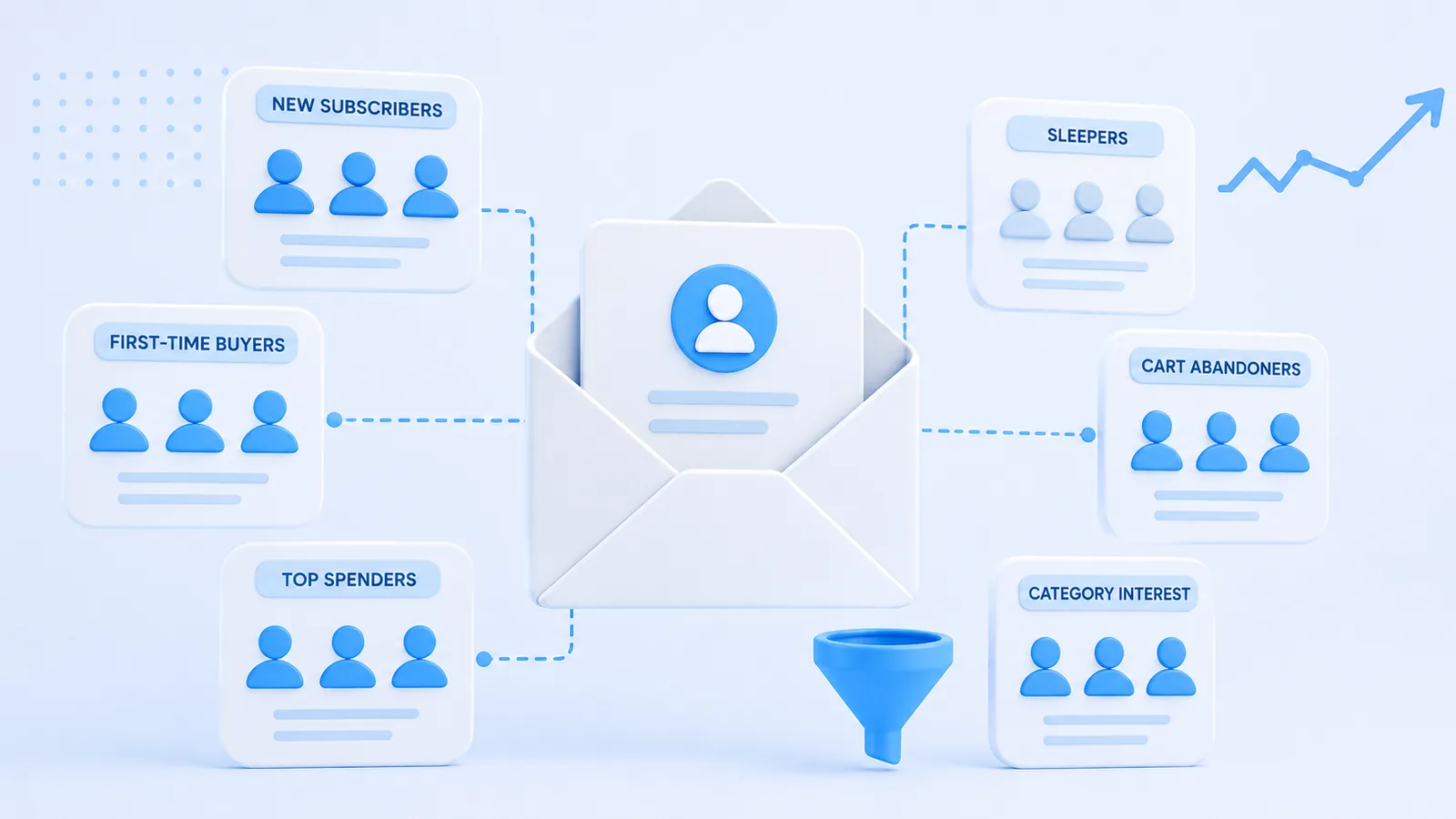
And stop mailing the people who stopped reading. A sunset policy for inactive subscribers is the single biggest lever, because a list full of dead weight tells providers that nobody wants your mail. How to build that segment, and five others that earn money instead, is covered in our guide to email segmentation.
Content matters, less than you think
Subject lines in capitals, walls of exclamation marks, "FREE" repeated four times: still a bad idea. But content filters are a smaller factor than reputation these days. The rules that remain: make your emails mostly text rather than one big image, skip link shorteners, and keep the unsubscribe link obvious and instant. Gmail and Yahoo require one-click unsubscribe for bulk senders now anyway.
A working unsubscribe link is your friend. The person leaving quietly was never going to buy, and the alternative exit is the spam button, which costs you reputation with every press.
Deliverability is the foundation under every flow and campaign we build. Our email marketing service includes the authentication setup, list hygiene and monitoring, so the emails we write actually arrive.
New domain? Warm it up
A fresh domain with no sending history cannot email five thousand people on day one; that pattern is exactly what spam looks like. Start with your most engaged few dozen recipients, then grow the volume gradually over four to six weeks. Boring, and it works. This matters most after a rebrand or when you move to a new sending domain.
Keep score
Google Postmaster Tools is free and shows how Gmail sees your domain: spam rate, reputation, and a blunt pass-or-fail compliance status. Check it after every big send. Your email platform's own dashboard fills in the rest, and a slow drift down in open rates is usually deliverability rot, not boring subject lines.
Deliverability is not a one-time fix, but it is also not a dark art. Authenticate, keep the list clean, email people who want it, watch the two numbers. Do that and the inbox takes care of itself, which makes every other email effort work, from cart recovery to campaigns.
Frequently asked questions
Why do my emails go to spam?
Usually one of four things: missing authentication (SPF, DKIM, DMARC), too many spam complaints, a list full of dead or bought addresses, or sending patterns that look suspicious, like a sudden burst from a brand-new domain. Fix authentication and list quality first, then content.
What are SPF, DKIM and DMARC?
Three DNS records that prove your email is really from you. SPF lists which servers may send for your domain, DKIM adds a tamper-proof signature to each message, and DMARC tells inboxes what to do when either check fails. Gmail, Yahoo and Microsoft now expect bulk senders to have all three.
What is an acceptable spam complaint rate?
Google's line is clear: stay under 0.1% in Postmaster Tools, and expect blocking if you sit at 0.3%. In practice that means only emailing people who signed up, making unsubscribing effortless, and not blasting your full list with every campaign.
How long does it take to fix deliverability?
The DNS records take an hour. Reputation takes longer: after cleaning your list and improving your sending, expect several weeks of consistent, well-received email before inbox providers fully adjust. A brand-new domain needs four to six weeks of gradual warm-up.
Are your emails even arriving?
We check authentication, complaint rates and list health as part of every email engagement, then fix what blocks the inbox.
See our email marketing service